Recovery Elevator’s Paul Churchill on Sobriety Podcasting, Community, and Speaking Out
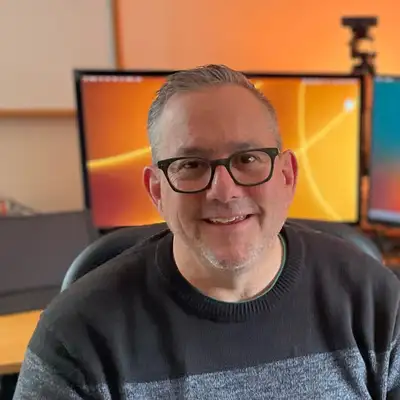
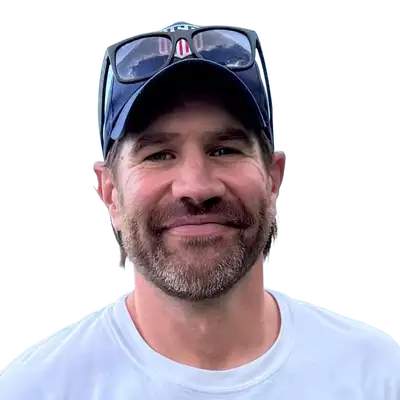
Hi. I'm Stephen, and this is Produced By. In today's episode, I'm talking with Pual Churchill, the creator and host of Recovery Elevator. Paul started Recovery Elevator in 2015, just a few months after he stopped drinking. What began partly as a way for him to hold himself accountable has grown into more than 600 episodes and a much larger recovery community.
Stephen:They're built on one simple idea. People talking honestly about their experiences can help other people. Podcasts like Recovery Elevator are so important. Someone struggling with alcohol may not be ready to walk into a meeting, call someone on the phone, or even admit to themselves that they need help. But they can put on a pair of headphones and just listen.
Stephen:They can hear someone else's story, and sometimes they hear enough of their own story that they realize they're not alone. I know that because I'm an alcoholic. That's something I've shared with a small number of people in my life and with other people in recovery, but not something I've shared publicly or on a podcast. I was uncomfortable during this interview. You'll see it.
Stephen:I was really uncomfortable. And at one point, I had to stop to gather myself. I knew before we started recording that my own recovery might come up. I mean, it should come up. I wasn't sure what I was gonna say and how I was gonna say it.
Stephen:You'll hear that moment in this conversation. What surprised me was how difficult it was to say something out loud that has now become such a normal part of my life. And I think that discomfort gave me an even greater appreciation for what Paul has been doing every week for a decade, and every person on his show who's willing to sit behind the mic and share their story. So in addition to some technical difficulties that you'll see in here, this episode was a little different for me. Here's my conversation with Pual Churchill from Recovery Elevator.
Stephen:Enjoy. Pual, thank you for joining me today.
Paul:Stephen, hello. It's good to be here with you. Thank you for having me.
Stephen:Yeah. It's nice to meet you. And I'm gonna start today's show by throwing some of your questions at you that you start with. I figured that'd be a good way to get an introduction here. And you usually start with, when was your last drink?
Paul:Alright. Cool. Me in the hot seat. This is fun. Okay.
Paul:I am ten days away from twelve years away from alcohol. So my last drink was on 09/06/2014, recording this on September 2. So coming up on twelve years, my man.
Stephen:Wow. Congratulations.
Paul:Yeah. Yeah. Thank you, Stephen. Appreciate it.
Stephen:Your And next question always is, how about some background about yourself? Maybe where you're calling in from, your age, things you like to do for fun?
Paul:Alright. Okay. Here we go. Yeah. So my name is Paul.
Paul:I am 44 years old. I'm calling in from Bozeman, Montana. I do Recovery Elevator for a living. This is a podcast. This is a movement about sobriety away from alcohol.
Paul:We do courses. We do alcohol free travel. We do retreats. And somewhere in that process, we split into a nonprofit as well called Cafe RE, which is an alcohol free community. I've been doing that for almost ten years as well.
Paul:Now for fun, man, I love to be outside. I've got six Nigerian dwarf goats. I recently got chickens. I live in Bozeman, Montana, which the mountains are just so incredible. I don't live far from them at all.
Paul:So I find myself outside. I love music. And if I can play the ukulele outside I have a two year old, so I would still say I'm new to fatherhood. And if I can combine all of those, being outside with my kid, with the ukulele, with my goats and chickens, I'll even go one step further. I'm a big fan of reptiles, and sometimes I'll get I have a large boa constrictor.
Paul:I'll get this big snake outside too, and we're all commingling together. No one's eating each other, and it's it's pretty fun. It's neat. Yeah.
Stephen:That sounds like a blast. So in early two thousand fifteen, you said you your recovery date was 2014. So six months or so later after your last drink, you decided, hey, I'm going to start a podcast. Maybe you could tell us, like, a little bit about where that idea came from and how this gets started.
Paul:Yeah. For sure, Stephen. Let's do this. So I was two months away from alcohol, and I was about to go into an Alcoholics Anonymous meeting. And I was outside the meeting.
Paul:It was roughly five or 6PM. I was standing behind a pine tree. This is due to the stigma. Right? I didn't want any cars driving by to see me about to go into an AA meeting.
Paul:So I was hiding shamefully behind a pine tree. There was a voice in my head saying, dude, Paul, we've just gone two months away from alcohol. Let's not go to the meeting. We've got this. Now previously, Stephen, every time I said I got this to myself, a relapse was followed it was followed by a relapse within like a day.
Paul:So when I said I got this, you know, something paused me in my tracks. And thank goodness, Stephen, there was a deeper wisdom inside of me, a deeper voice of knowing that was like, Paul, dude, you don't got this. And you gotta go to the meeting. And in that very minute or in that very moment, the idea of a podcast showed up. I had always been a fan of podcasts, and the idea of starting a sobriety podcast showed up into my consciousness mostly selfishly so I could create accountability for myself.
Paul:And another realization of like, dude, this is so lame that I'm hiding behind a pine tree because of the stigma with drugs and alcohol when there's so many people who struggle with alcohol. And so, yes, I went into the meeting and yes, I started the podcast, but it wasn't the next day because the idea of recording my deepest, darkest secret, this is me being a raging alcoholic for the previous decade, fifteen years of my life, that scared me. And for probably many listeners can understand why. But I knew I had to do it if I wanted to give myself the best chances of staying sober. Like, it got really rough, and maybe we can cover that later if you'd like.
Paul:But I had the idea, and I took my friend out for breakfast who's had a very successful YouTube channel. He's still doing it. And I told him the idea, and he said, dude, I think it's a great idea, but you can't half ass it. You can't halfway put yourself out there. You can't halfway tell your story.
Paul:And that sat with me. And then I went on it was almost a 5,000 mile road trip. I live in Montana, drove to Seattle, drove all the way down the one to the border with Mexico and California just to map this thing out mentally of like, dude, am I really gonna do this? Because the recovery landscape in 2015, well, it was 2014 looked a lot different. There weren't as many people talking about it.
Paul:The explosion of alcohol free beverages like Go Brewing, athletic brewing, Beagle Puss Brew. There's so many of them out there. That's one of my favorites recently. None of that stuff was here. None of that stuff was here.
Paul:And so I got back from that road trip and said, yes. That was November. And I said, yes. I'm doing this and started exploring how to make a podcast. You know, what microphones, what software, you know, that you gotta have a website too.
Paul:And it's like after everything I figured out, I was like, oh, I need I think I need to figure out how to do this. I need to learn how to do this. And I thought the easy part would be speaking behind the podcast. I remember I put so many hours into it, figuring all that stuff out I just mentioned, and then I got behind the mic, hit record, and it was like, what the heck am I gonna talk about now? Because it was scary too.
Paul:Right? I'm talking about things that I have never told anybody else. So the first episode launched one I launched with four episodes, zero zero, RE one two three. Mhmm. And, my gosh, man.
Paul:I remember the first three months for specifically the first month before going into bed. It was this lump in my throat of like, what the f am I doing? Holy buckets. Yeah. And it was just me.
Paul:There was no production team. Nobody doing show notes. I was just recording it, editing it for myself. And the good news at first, Stephen, which calmed those nerves of anxiety was nobody was listening. I check stats.
Paul:Be like, wow. Wow. We had three listeners this last week. It was myself, my brother, and my mom. That's why I'm like, yes.
Paul:Alright. We're okay. And I'm still sober. So here we are week two in this project. I'm still sober.
Paul:We're we're okay. And then I think it was, like, the second or third week, I had 15 listeners. I was like, uh-oh. Uh-oh. Uh-oh.
Paul:And then I checked one week and we had, like, 40 and then a 100, and it kept rising. And it wasn't like my anxiety followed the increase of stats because I got my first email, Stephen. And first, I was afraid to open it just with the stigma. For some reason, I thought that would be the email of like, you freaking loser. It was not.
Paul:It was an email of saying, hey, man. Thank you for your podcast each Monday. It's helping me stay the course. It's helping me quit drinking. And I was like, holy buckets.
Paul:Something might be working here. I've just logged another yeah. I'm almost at six months of sobriety. People are listening. It's helping them.
Paul:You know, Stephen,
Stephen:it was I have I have so many questions in one two so far. I'm gonna pause you right there. What did the landscape of recovery content online look like at the time back in 2015?
Paul:Yeah. Yeah. It's I was definitely an OG in the Sobriety Podcasting world, and I think I was the fifth Sobriety Podcast. The fourth started four days before I launched. Uh-huh.
Paul:So there were just a couple podcasts, not really with any strict cadence, like schedule, just kind of sporadically showing up on iTunes. And I heard those in my sobriety process. I didn't quite resonate. They were good. Maybe I was focusing on the differences and not the similarities.
Paul:I don't know. But, yeah, I decided to launch one and we'll cover more. But today Yeah. Stephen, there's over 400 sobriety podcast.
Stephen:That many.
Paul:Yeah. Which is incredible because my mission from the start was like, yo, we gotta talk about this. We absolutely have to talk about this. Yeah.
Stephen:Right The from I went back and listened to the first few episodes to get a sense of, you know, the evolution of the show. I was shocked by two things. One, how naturally you sounded right from the beginning. You sounded comfortable. I don't know how many times you had to record the first few episodes to feel comfortable, but you sounded good right away.
Stephen:And second is a lot of shows I find evolve over time. They had right at the beginning, they don't they're looking for their feet. They're trying to find their format. Right from episode two, you've had your format in place, which surprised me. And it it may have changed slightly here and there, but you really got the sort of the beginning of the show with some ideas, concepts from you.
Stephen:You go into the interview, and that format was right from the very beginning. How did you find your format so early?
Paul:Yeah. Thank you, Stephen. I'd like to say I invented it. I discovered it, but, there was a couple other podcasts that I was listening to that had that same format, which is basically, hello. What's up?
Paul:Welcome to the podcast. And I would cover a topic with sobriety. Like, does moderation work? Is alcohol good for you? Top five ways to say sober at a social outing.
Paul:So I would dedicate five to ten minutes to covering an intro. Again, Stephen, part of this was was a selfish podcast. Like, I was fascinated with these topics of, like, is alcohol really good for you? Because for so many decades, big alcohol, they had one task. Their most important task was to convince the consumers on a mass level that ingesting a poison was good for you, and it worked.
Paul:And, thankfully, that that paradigm is shifting. It's crumbling at a at a such a quick pace. But then I interview a guest. So intro followed by about a forty to forty five minute interview. And when I when I first started, Stephen, I was like, how in the heck am I gonna find people who are willing to come on a podcast and like, hey, man.
Paul:I got two DUIs. I went to jail. I lost my family. I mean, that's that's a tall order. But after the first 10 and it was hard to find, like, the first 10.
Paul:But after that, I started getting emails, Stephen, from listeners saying, hey. Can I share my story? And this is the beauty of the foundation of sobriety. And thank you to Bill and doctor Bob. These are the founders of AA who really set this whole ball in motion in 1935.
Paul:They found that when they share their story, two things happen. Number one, they stay sober. It helps them stay sober. And number two, it helps the other person. Right?
Paul:This is like back to the OG roots of humanity of how we've evolved is sharing stories by the campfire. This is where we find water, which caves to stay away from because there's a saber tooth tiger. And the subject matter is a little different. We're not talking about which animals have large fangs. We're talking about an elixir that has large fangs, alcohol.
Paul:And so that is what this was from the very beginning was storytelling and passing along information to help the our fellow human being. And it was a win win across the table. It helped me. It helped the interviewee, and it helped the listener. So, you know, after, like, 20 episodes, those initial butterflies kinda went away.
Paul:It was like, oh, shit. I think we got something here. I didn't care about anything financially. Like, none of that was on the table. When I say we got something here, it's like, alright.
Paul:I'm logging time away from alcohol. It's helping, like I said, the win win win. Let's roll with this, and let's just see what happens.
Stephen:You mentioned that starting the show was selfish for you in terms of your own accountability to stay sober. Is there anything that particular maybe an email or some event that happened when you transitioned or understood that this was gonna be something more than you keeping yourself accountable, that this show maybe is for others as much as it is for you?
Paul:Yeah. And I had some of those things in mind when I started of like, maybe there is a chance this this goes somewhere else. It is in our human biology to help other people. When we help others, oxytocin is released in our body. And that's like the feel good chemical, not so much dopamine, but oxytocin is the chemical of connection that we feel good.
Paul:So I think it's in line with how we're wired. I think there was it is, there's never been this amount of people struggling with alcohol, like in the history of humanity.
Stephen:Mhmm.
Paul:And so I think there was a need for it. I think I lucked out when I got into the world of podcasting. There's over 4,000,000 podcasts right now on on on all platforms. When I started, I don't know what the number was, maybe a couple 100,000. But nothing like what it is today.
Paul:So I think I got a little lucky, Stephen, of when I launched, how I launched. Also, I I'm very thankful of the talents that I've been gifted, maybe from a creator, from God. Who knows? My favorite class in college was public speaking. Like, whose favorite class is public speaking?
Paul:Very few people. It's just something that I have been natural with. And thank you for mentioning that, Stephen, about my early episodes. I'm actually going back, and I'm correcting some of the sound. I'm removing announcements that are no longer relevant.
Paul:And I hear myself, and I'm like, oh my god. Have we come a long way? And I'm actually, like, really critical of that guy, and I've gotta be like, yo, Paul, man. It's okay. I get you gotta love that guy.
Paul:So thank you for saying that. I see it a little different, but here we are.
Stephen:So you mentioned a minute ago that you had difficulty finding early guests. Did you tap into friends and family? How did you get them? And I guess at this point, people coming to you. Is that how it works today?
Paul:Yeah. Today, I would say 80% of the people email, or they come up to me in person, whatnot. And occasionally, I am in a cafe or a chat, or I hear somebody or meet somebody. I'm like, yo, I wanna get you on the podcast. So I definitely invite people on.
Paul:But at the beginning in the first 10, it it was hard. I had one friend out of the first 10. His name's Nate, episode seven or something. He's still a great buddy of mine. We coached Pop Warner football, Little League football together, and I saw Nate last night.
Paul:But so I went to AA. That was a huge part of my early sobriety. I remember asking people in AA, And, you know, nobody likes rejection. And a couple people were like, oh, my sponsor doesn't approve of this. I was like, ugh, ouch.
Paul:You know? Yeah. And a couple people just said no for pretty obvious reasons. It's like, I I also understand. Maybe it's not a rejection.
Paul:I actually totally understand why someone would not wanna come on a podcast and announce their struggles with alcohol. Like, that's actually pretty understandable. So the first 10 people were hard to find, but after that, they just came in. And, Stephen, today, we probably get one to three requests per day. And it's a podcast that comes out once a week.
Paul:Before we got on, I was just going through my inbox, and there was there was two requests. So and one thing that I learned, Stephen, throughout the years, pretty early actually, is our target interviewee, and this was flipped. This is not how I thought it would be. You know, it's not Brad Pitt who is sober. It's not the rock star that everybody's heard of who is sober or the celebrity or the author or the sobriety coach.
Paul:It's the person that nobody's heard of who has very little sobriety time. Right. So I thought, Stephen, it would be a big name with thirty years of sobriety. Like, man, that's who I gotta get? That's gonna be hard.
Paul:But but shortly after starting, I found and I heard this from people too. You know, somebody who comes on a podcast with fifteen years of sobriety Yeah. They're less relatable than somebody with thirty five days. Does that make sense?
Stephen:Yeah. Sure. It does.
Paul:Yeah. So it's it's just a little bit more raw. It's a little bit more like, oh, two weeks ago, this went down. And those people are easier to find. Yeah.
Paul:Those people are easier to find. And, again, their motivation for coming on the podcast, it's not to promote a book. It's not to promote a program, which is fine. We've had those people. Their their purpose is one, it's single, it's simple, and that's to help other people.
Stephen:Now you mentioned, Alcoholics Anonymous earlier, and one of their traditions is anonymity, right, and not promoting the program. Have is that been a part of how do you deal with that in your program, in your in your show is dealing with anonymity? I assume it's you mentioned some guests at the beginning were hesitant. How do you deal with that today with your guests?
Paul:Yeah. There's a there's a publication within AA called as Bill Sees It. Mhmm. It's very common in the rooms of AA. Now Bill has a passage on anonymity in the book called as Bill sees it.
Paul:And most of AA has got it wrong or doesn't quite fully understand Bill's vision for anonymity. The biggest one there is what happens in the meeting needs to stay in the meeting for very obvious reasons. Who's in the meeting? What specifically they said? That has to be a closed safe container so people can be vulnerable.
Paul:They can share what they're feeling. You know, that makes a lot of sense to me. What Bill didn't intend is that when we leave the meeting, we have to keep our mouth shut about our sobriety. In fact, some of Bill w's early sponsees were very vocal. They were in front of microphones, in front of thousands of people about talking about AA, talking about their sobriety.
Paul:And if you think about it, how in the hell are we supposed to fix one of the greatest epidemics of our time? This is addiction, alcoholism if we can't talk about it. I mean, it just, like, doesn't make sense at the found foundational foundational level. And also the anonymity component is like a curtain of shame to stand behind. Yeah.
Paul:And sobriety and your life of life of wholeness, of expansiveness does not exist in your comfort zone. That's like life in general. You gotta step outside and grow. And so that there's that part. And the other part, you know, AA is I'm a huge fan of AA.
Paul:You know, they don't market. They're a nonprofit, but they don't do fundraising campaigns. Like, a lot of that stuff works, and I'm thankful that I've been able to build my program off their example. I say program. We don't have, like, step one, step two, step three type thing.
Paul:Mhmm. You know? But mostly in the early days, I thought that most of my critics or my criticism would come from the normal drinker. Again, this the stigma. Yeah.
Paul:Just it's like drink responsibly. Oh, you can't drink responsibly. It's your fault. And, you know, that's a big alcohol line. I thought the criticism would come from people outside like the normal drinkers, but most of the criticism criticism came from people from AA in the beginning.
Paul:And that was that was, like, really challenging, Stephen, to be I can imagine. Yeah. To be, like, a member of it and also being attacked from within, that was hard. And some of them were really brutal, but I also never mentioned it in AA. I would never promote my podcast in AA because that's not the right place to do that.
Paul:But people found out about it, and that was a challenge. But the further I go, the more that has softened to almost disappeared because the recovery landscape in general has just changed so much.
Stephen:Right. I would say that in the meetings that I attend, your show is brought up frequently, and that was surprising to me when I first started attending meetings to hear I was aware of your show because I found it when I was looking for help. And then to hear people in the program mentioning your show was reinforcing to me for those same, you know, issues around anonymity that you were discussing.
Paul:Stephen, did you just say the meetings that I attend?
Stephen:Yes. I did say that.
Paul:Alright. Well, listeners, before we hit record, we had a brief discussion. Yeah. Because Stephen was like, the people that I invite on the show are from the podcast that I like. And I'm like, well, if you're listening to the RE podcast, my listeners are people who are sober or wanna quit drinking.
Paul:And you mentioned in the intro, you're gonna say something about that, man. That's that's big time, Stephen. And I think you're gonna get only only support and love from from doing that, man. And I and I heard before we hit record that you're you're coming up on two years or you hit two years. I just wanna say congratulations to that.
Paul:That is so rad. I'm honored to be be walking this path with you.
Stephen:Thank you. And I and I feel better now that I actually said that, and we can move on here.
Paul:A little scary. Right?
Stephen:Yeah. It is. Right? And I heard and I heard the I heard the fear in your voice in your first episode when I was listening to it a few days ago. Getting back to I have a question about the guests.
Stephen:You say you're getting two to three requests a day now. How do you filter with having only 52 episodes a year? And I say only, but 52 episodes a year is a lot. How do you filter hundreds of people down to the 50 that you're gonna have on your show?
Paul:I would say half of those are maybe from publicists
Stephen:Mhmm.
Paul:Who are advocating on behalf of a client. Say, hey. We think our client would be great. They've got a book called blah blah blah. And it's not about not about we don't wanna promote their books.
Paul:It's just we found in the first year that the target interviewee is somebody who is they've never heard of. They don't have a website. They don't have a book. They're not here to promote anything. And so in the emails, we'll say, usually, it's like, hey, I just wanna come on my I wanna come on the show to share my story to help people.
Paul:Like, if you say that, if you're listening right now, that's that's how you get on, basically. And I've got a team and they forward me. They kinda filter out some emails, and it's it's pretty straightforward now.
Stephen:So being consistent every Monday, and I think you I remember you saying at 6AM, and I'm not sure that actually comes out at 6AM every week, but every Monday at 6AM, there will be an episode. And on episode 500, you reaffirmed in that episode that you have come out every Monday for 500 episodes. So that kind of consistency is extraordinary to me. I've been involved with a podcast that's roughly came about about the same time, about the same number of episodes, but it was very we were not quite as consistent, and it it's very hard to stay on a schedule. So I'm wondering how you were able to do that with life, with travel, with illness, with COVID, with how how did you achieve that kind of success?
Paul:Yeah. Yeah. Thank you, Stephen, for for the recognition on on that consistency. I committed to 52 episodes at the beginning. I think in the first couple episodes, I was like, hey, I'm gonna be here for fifty two weeks.
Paul:The episode's coming out at 6AM in the morning. We'll we'll circle back at episode 52 and see where we're at. Now neat thing with the Internet and how you can schedule things, guys, on Monday morning, I'm not awake at 04:30 in the morning, you know, uploading and and piecing together a podcast. So with traveling and I've been very blessed to have been able to travel the world. Sometimes episodes are dropped when I'm on an alcohol free retreat with Recovery Elevator.
Paul:I mean, that's happened several times. So we can schedule these things weeks in advance. And I usually have about seven or eight interviewees, like, interviews kinda in the hopper in the queue, and I try to have about two to three intros done. And so we have a whole episode ready to go about three weeks, probably two weeks before. And occasionally, our whole whole team comes out for a retreat in Montana.
Paul:And so we all have to get together and, you know, hit the schedule to make sure the episodes come out. But, you know, for me, I think it's simplified things of the question of, like, when should I you know, when when do I broadcast a new episode? That answer was answered by saying every Monday at six. I think we release it at, like, 4AM Mountain Standard Time. But to me, it kinda simplified things.
Paul:The harder part is then you gotta stick to it. But, you know, the human body is is built on routine. It's built on cycles. Right? Sun goes up, sun comes down, there's seasons.
Paul:And so you kind of fall into the podcasting cadence and schedule and cycle. So I think after, like, episode 20 to 25, that's kinda when the habit was already just baked in. It's like, alright. In the back of my mind, gotta get an interview. You gotta get an intro.
Paul:It just it just kinda happened, and that's definitely where we're at now. If you're doing 600 of anything, you're gonna get better at it. It's gonna become more natural with the whole team. I don't look at the RE podcast as work. Said that word slowly.
Paul:We do have sponsors now, and it's more complicated. Yeah. But I think why we've gone so far, and I've got people on the team who have been with me for five, six, seven, eight years, is because we're in sobriety. And there's just a little bit more buy in there. I have people who are doing the show notes who are volunteering, but they're volunteering because it helps them stay sober.
Paul:So, again, it's like win win win win type thing.
Stephen:Right. So how much, personal touch do you have on the production now other than doing the interview and sitting behind the mic?
Paul:Yeah. Great question, Stephen. So I edit just the intro. Right? So I will do a couple sound edits, clean up some things.
Paul:I'll take my own ums and ahs out. Because really, you know, speaking is an art. And Yeah. You think like what you say is super important, and it might be, but it's also the space. It's the gaps.
Paul:It's the dynamics that really put it all together. Mhmm. And I so I edit just the intro, and then we have a gal named Natasha who edits the interviewee, the interview component, and Natasha is sober. The whole team is sober or on this journey. I had a gal named Ty, and we shared a condo wall in 2015.
Paul:And Ty is still on the team, but she edited the podcast for, like, a decade. Yeah. A total podcast legend. She was already retired. Retired.
Paul:She came out of retirement. I taught her how to edit the podcast. She did it for a decade. I mean, when I look back on the OG legends of sobriety and doing RE, I mean, she's, like, at the top of the list. So if Ty, if you're listening, I gotta remember to send her this link.
Paul:But Ty, I love you. Thank you so much.
Stephen:There was a time you stepped away for about a year. I think Odette took the lead on the show for a while, and I think you also had Chris doing interviews. And I think when I first started listening, Chris was doing interviews not every week, but every once in a while. So what was that hiatus all about for you?
Paul:Oh, wow. Stephen, you know the you know the story behind RE. I love it. This is it's just it's so beautiful the way things work or unfold. So, yeah, Chris and Odette were podcast hosts.
Paul:Odette is still part of the team. I saw her two weeks ago at our retreat or find your people retreat in Bozeman, and and Chris is producing it. Means he takes the intro, takes the interviewee, takes the music, and he puts it all together. He makes the the mix down wiki wiki. It's kind of inside joke we have.
Paul:Alright. So right before COVID hit, I I quit, Stephen. I quit this whole thing. Yep. And not because I was on, like, shaky ground with Sobriety.
Paul:It was more of a, hey, dude. We've been doing this for five years or six years. Like, let's go roll. Let's let's live our life. We let's see what's next.
Paul:And I made an announcement to the community, and that was the plan. And then COVID happened.
Stephen:Okay.
Paul:And quickly within the community, I saw people falling off the wagon pretty much left and right. And I knew there was just something inside of me that, alright, now is not the time to shut the community down. Now is not the time to shut the podcast down.
Stephen:Mhmm.
Paul:Now is not the time. Yeah. It's just, a, it's not the right thing to do, but, b, I'm on the same journey. It might not be a bad idea for me to stay the course as well and have a weekly reminder. I just find it eerily coincidental, I don't know, that I quit, and then the pandemic, like, kept this thing afloat.
Paul:And so not only did I jump back in, but we built the team. Okay. But I also recognized I needed a break too. So that was part of it as well. And so I asked Odette.
Paul:I saw her as an incredibly talented individual. Said, hey. Could you do this? And she did it, and she rocked it. I could not have asked for anything better.
Paul:And then I came back and did half of the interviews. Chris did the other half, and Chris, you know, did an intro here and there. And they were both interviewed on the podcast in the early days. And it's just so so beautiful as how this is structured and how it works where people will be on the podcast, and then they'll end up on the team, like, a year later. And then they'll end up running the entire community.
Paul:And this is my community director, K Mac. Yeah.
Stephen:So prior to you taking a break, were you doing more of the work? Because you said you created a team. Was there no team prior to that or a much smaller one?
Paul:Yeah. Stephen, there were volunteers in place, a much smaller one. Yeah. You know, it was so hard for me to, a, ask for help, b, to delegate, and c, like, working with people is hard. And I'm 50% of that every time.
Paul:And it was just this mentality of like, I'll do it. I'll get it covered. It's just easier to do it that way. But if you wanna grow and you wanna reach more people, you can't do it that way. You have to bring other people on board.
Paul:And, also, I was doing people a disservice by not accepting their help. It helps me, but it helps them. Yeah. It helps them be part of a project that that helps people. And for most of the people who have been part of RE, it's been a positive experience, including for myself.
Paul:You don't do anything for over a decade if you're you're like in the dentist chair. You know? Oh, god. Another Monday showing up. And I don't mind writing.
Paul:I I write the episodes. I I research them. I write them. I slowly become a better writer through that process. I was like, I'm gonna write a book that was 20, yeah, 19.
Paul:Wrote another one that came out 2026. So you just you just very slowly grow, and if you keep showing up, you do one thing consistently over a period of time, it could blossom into something great even if I can venture to say that.
Stephen:Yes. Yes. I I wanna touch on your books, but I'm gonna hold that for one second. I wanna go back to this transition period for you. I went through something similar.
Stephen:I started a podcast in 2013 called Talking Drupal. I was the cohost, but I started I did all the preproduction, all the postproduction work myself. The other host just kinda showed up and recorded. The first 300 episodes were like that, and then I was burned out. So I basically said, I'm done.
Stephen:Those other two guys said, okay, we'll take your duties. And they did. They carried the show. It's still going on today, 600 episodes. After about six months, when I caught my breath, I realized that, you know because I was treating it like a job every week.
Stephen:It was just relentless to me at the time, and I was having other struggles. And then after that six months, I worked behind the scenes, and now I'm deeply involved with the show, not hosting, but I now have a clear mind that I'm starting new podcasts, and I'm able to move forward because I got a team involved. And we divvied the work, and it was no not as much pressure on me anymore. And it sounds somewhat similar on your side.
Paul:Yeah. Thank you for sharing a little bit about your process with that because we all reach moments of burnout quite common in the Western world where you gotta ask for help. And for some, a lot of people who struggle with addiction, that's a muscle that is almost completely atrophied. Partly, they don't want the help. You gotta wanna quit drinking.
Paul:It's hard to ask for help. Like, in humans in general, especially in the western world, we're taught, you know, the lone star, the lone wolf that we should be fully self sufficient. We're not. Humans are supposed to be around other people. So, you know, with our team now, it's basically myself.
Paul:This is just the podcast team myself. I have somebody a volunteer who's doing the show notes. What's up, Robin? Our editor Natasha, and then Chris who does the mix down. Chris is the former podcast host.
Paul:We've got the cadence. We figured out programs of where we put, like, Excel tables. Well, programs. We use it's called Coda. Where I put the titles and where they where they get the show notes, where they get this.
Paul:We use Dropbox. Just how how do you how do you get a file from one person to another person? How do you how do you edit it? We have Adobe Adobe Audition, but we have the Adobe Adobe Creative Cloud with two users. So we pay one fee for that, but two people download it.
Paul:I'm here. Our editor is in California. I edit it. You know, I record it. They they edit it later that week, put it in Dropbox into another folder.
Paul:So you choose to these are just these are just systems over time that build and fall into place. You just wanna make small tweaks to make it easier.
Stephen:You just mentioned a few minutes ago that you wrote two books. You started in episode one as someone, hey. I'm an alcoholic. I need help. I'm trying to figure this thing out.
Stephen:And slowly, would say you turned into an expert on alcoholism. You did that through the podcast, I expect, right, and outside research. And I'm wondering about that transition period where you were, hey, episode one up to the point that says, you know what? It's time for me to write a book. How did that happen?
Paul:Yeah. Yeah. Thanks, Stephen. How it happened, I went to a convention in Boise, Idaho in 2018, and there was a charismatic dude doing a workshop about writing a book, how they could open doors for your whatnot. You had a year to use the service.
Paul:I walked up right after the workshop, gave him my credit card. I was like, let's roll. I'm ready. And I left the conference, and I was like, holy shit. Did I just do that?
Paul:I have to write a book now. And I don't think I would have written a book unless I had that accountability built in. I would have lost
Stephen:Okay.
Paul:The money if I didn't write the book. So I wrote the book, and it actually did really well. It's called alcohol is shit.
Stephen:Shit. Yeah.
Paul:Yeah. And the second book was called Dolce Vita. It came out this year. But part of part of the book is after doing this for so long, and thank you for commenting on, maybe I'm a professional, maybe I'm an expert in some areas of this sobriety field. There's light bulbs that go off at different times the process, Stephen, of like, oh, shit.
Paul:You know? If if 300 people have said the same thing, like, that's gotta be a deep truth. And one of them that emerged right away was that moderation does not work. Mhmm. Right?
Paul:Like, we're trying to moderate we're trying to moderately consume the most dangerous drug on the planet that kills the most people. And if you flip that, like, hey. Let's moderately smoke crack. It's like, woah. You can't do that.
Paul:You can't moderately shoot heroin. We all know where that goes. But for somehow, we think we can do that with alcohol, which is which is more addictive. Another thing that emerged was when I first started, I thought alcoholism was a disease. And I'm actually not here to convince anybody that it's not because that actually helps people recover however they frame it.
Paul:But there's a reason why in the last hundred years, two hundred years, this is the industrial age, and this is taking off in the two thousands that addiction is skyrocketing. So most anthropologists agree that addiction is a modern phenomenon, and I love to geek out about this, Stephen. What I mean by that is, you know, three hundred years ago, addiction wasn't a thing even nearly like we see today. Of course, there are references to excess in human history, but nothing like we're seeing today. And this goes back to the classic 1972 experiment from doctor Bruce Alexander, I think.
Paul:It's Rat Park. Mhmm. Basically, the way we are living right now is completely out of line with our biology. I'd say how a human being maybe is not supposed to live, but how we've been living for thousands and thousands of years. And that, basically, as we dismantle the tribe, the community, the village, and put smartphones in people's hands to say, this is how you're gonna connect with more walls between us, more screens, more rubber on our feet.
Paul:We're seeing addiction climb. We're seeing addiction skyrocket. I do think addiction is gonna be one of the greatest epidemics of our time. Good news is people are drinking less, but addictions are transferring. Addictions are rising, like, all across the board.
Paul:And so part of the book process was like, oh, shit. I wanna move the needle on this. I wanna help. I want to educate. And I think people with drinking problems, and this is how native Americans view it, or these symptoms of unrest, shall we say, are almost like canaries in the mine
Stephen:Mhmm.
Paul:That are signaling to the whole of humanity that we're we're out of balance, if that makes any sense. I know the podcast isn't specifically on this. It's more about production, but that's a big one that has emerged. And that is also phenomenal news that it can be corrected. You can enter into community.
Paul:You can't change your DNA, and you can fully heal from an addiction.
Stephen:I would say that that's one of the central themes of your latest book, Dolce Vita, right, is that addiction is your body's message telling you that something's out of line.
Paul:Yeah. Thank you for for yeah. Thank you for mentioning that theme. It means you've either read it or done some research on that. Appreciate that.
Paul:Yeah. 100%. Oh, thank you, Stephen. There's no first off, scientists have not found the the genetic line for addiction. There's no gene for addiction.
Paul:You know, once they find the alcohol gene for addiction, will they find the Amazon online shopping gene, where they find the cigarette addiction gene, where they find the meth gene. It's just it's not there. And so when in our society that the the needs of community and connection are not being met, we will look for a third party substance to backfill where we're coming up short in our society. This is a huge one, and it's only increasing. But I think, if I can do this for a sec, if we zoom out for just a moment Yeah.
Paul:I think there's something bigger taking place here where human beings are becoming aware of the ego. And this is like the Buddha's teaching is we have to split from the ego as a species. The Buddha calls it the river crossing that we all have to take. And I think an addiction is like an accelerant or one of the greatest ways to do that. It's like a fantastic teacher.
Paul:Of course, it sucks when you're in throes of an addiction, but you'll reach a moment where you'll be like, wait a second. There's a voice inside of me that says, oh my god. I gotta drink. And there's another voice that says, I'm done drinking. And you're like, which one do I choose?
Paul:Am I this one? Am I that one? And then there's a deeper voice that says, wait a second. Maybe you're none of those two voices. Maybe you're not any of those voices.
Paul:And maybe you're not any of the voices inside the head. Maybe you're not the voice that says you're a banker. You're a father. Maybe you're none of those. And for so many people, and this is a theme again that has emerged, there's like the split from the thinking mind, and there's the space that is created.
Paul:And I love humans. I like to love on our current way of living, but we're also struggling deeply in a way where almost like the future of our species is as a jeopardy. You know, we got AI, the the temperature. We got global warming. You got a you got a nuclear war, all that stuff.
Paul:And so and and this is some of the teachings, the core teachings of Jesus, Eckhart Tolle, the Buddha, and some of the big mystic masters throughout our history, Lao Tzu, is we have to split from the ego. And I think addiction is taking us to a beautiful moment of humanity where it can almost be said a flowering is happening, and it's starting by a mass of people who you would least expect, and that's the addicts.
Stephen:It's clear your passion for this topic and recovery, and just like as your book title is living the good life. Right? The passion for this is oozing out of you. I appreciate it. We've mentioned we briefly mentioned Cafe RE, and I I don't want to gloss over that.
Stephen:Recovery Elevator is the podcast, then there's Cafe RE. Can you describe what that is and how it relates to the podcast?
Paul:Yeah. And if you're an entrepreneur or you're doing a project out there, it's the listener who's most likely gonna tell you where to go next. And I remember about a year into doing the podcast, I got an email saying, hey. Have you ever thought about creating a Facebook group where listeners can can can connect in the group? This guy, his name was Robert.
Paul:Still in touch with Robert occasionally. So I started a group, and we got to 500, like, overnight. I tell you what, it happened so fast. And through that, we started a second group. We started a third group.
Paul:We started a fourth group. And we recognized there was a cap on the group. Like, 350 was your ideal amount. And so we cap the size. Any bigger, you kinda lose intimacy.
Paul:And actually for human history, humans have been organizing in groups of one fifty. It's actually it's called Dunbar's theory. I say three fifty because only about a 150 were active. So that was like our sweet spot. And that has evolved into we left Facebook two years ago.
Paul:We now have our own app available Android, iTunes, and now it's a nonprofit. It's called Cafe Aerie. About 900 members in there. We've got in person meetups. We do accountability partner pairings.
Paul:We do about 30 or 40 chats per week. We have in house AA, in house recovery dharma, in house all other kinds of programs. So it's not like CAFE RE and not AA. Yeah. We embrace all pathways of healing.
Paul:Big asterisk there. Just don't do it alone. That's it. It's all community focused. Yeah.
Stephen:So Recovery Elevator is a business. I guess, would you say a for profit business, and Cafe RE is a nonprofit? Is that what I'm hearing?
Paul:That is correct, Stephen.
Stephen:Okay. I have, like, one last question for you because we are running out of time. If you were launching Recovery Elevator today, the landscape for podcasts is very different today. We're moving sort of into a world where it's video, is more dominant, I think, than audio or both anyway. Would you consider Recovery Elevator being a video based show?
Stephen:Have you ever? And the last part of that is, would you do anything different if you were starting today?
Paul:Yeah. I do about a 155 things different, but that's okay. That's how that's how you grow. You wanna fail and you wanna fail fast. It sounds weird to say that, but you wanna figure out it's not working soon and get it corrected.
Paul:I wanna keep it simple. And, you know, can RE be a podcast and a YouTube channel? Can we be on Instagram, TikTok, Snapchat, Twitter? I mean, the list goes on and on and on. Yep.
Paul:You know, we're exploring doing the video things on Instagram. We're now getting snippets of our interviews, video formats on there. And you've also always gotta be changing, Stephen. Know? Even though the format has not changed for over ten years, you've always gotta be changing.
Paul:And the landscape is always changing. And we're almost in this spot now, Stephen, where it's like, how do we how do we stand out? And earlier I said there's over 400 sobriety podcasts. There might be 500 now, which is awesome. But on the flip side, it's like, how does Recovery Elevator how do we stand out?
Paul:How does our community stand out? Because when we did our first sober travel trip to Peru in October 2017, it was like me and a couple other groups doing sober travel. Now I was just on it's called think it's called dry tripping travel, like a sober travel platform. Fifty, sixty, 70 companies doing sober travel. So how do we how do we stand out?
Paul:You know, for one, I think we're again, I lucked out when I started it with the timing. A lot of our guests on these trips are returning customers, which is a great indicator that we're doing something right. And I think now is it's such a beautiful time. It's like the Wild West of recovery again of how it's gonna look. So you've got you've got the Internet.
Paul:You know, how is that how is that gonna look? So what would I do differently? Man, I wish I dialed in my audio a little differently. I have I have the same Podcast mic that, like, all the big podcasters have. I wish I I wish I had that mic from the start.
Paul:I wish I Yeah. Took, an Adobe class on how to make your audio sound good, but I gotta be kind to myself. That wasn't really the point at the beginning. The point was to stay sober. That's it.
Paul:And so I improved those things when the time was right. And we're still getting, you know, several thousand downloads per episode, but it has dropped. It has dropped for a couple years, and that has been a huge challenge. I even met with our team last year. I was like, hey.
Paul:Do we wrap this up? You know, have we hit our mark? And we're going forward because it's neat with sobriety is if this episode hits just one person Mhmm. Then it's worth it. Now you mentioned earlier, yes, Recovery Elevator is a for profit business.
Paul:We have payroll. We have teams. If I'm gonna dedicate my life to this, I've got a mortgage. Yeah. I've gotta put money away for college.
Paul:I got a kid now. So it's a little more complicated, and we've got a team. And to keep that team, you can't all be volunteers. You only have to pay them. So I've always been an entrepreneur that's been fun and challenging, but next to last two years has been extra challenging.
Paul:And there's another thing is the corporate. Corporations are getting into the podcast world. Right? There's a lot of money there. It's like every late night comedian now has a podcast.
Paul:I have a part of some podcast groups, and the theme is like, hey. Is anybody else's podcast downloads going down? And everybody raises their hand. And so how do you how do you keep showing up? But after every interview, Stephen and I've had some, it's called, like, you wake up on the wrong side of the bed.
Paul:It's just some people you're having, like, a rough day, and I'm like, oh my god. I have an interview today at 3PM. Like, I do not wanna do this. And within five minutes of the interview, Stephen
Stephen:It's all gone.
Paul:It's all gone. Yeah. Because we're wired for authentic connection. And so I'm having people on the show sharing their rock bottom moments, and I'm so lucky and blessed. I get to be the one to guide them through that for one of the most supportive audiences on the Internet.
Paul:And so for listeners out there who are thinking about creating a podcast or creating one, you gotta be you, and you gotta be open about your struggles, or you gotta you gotta be real because humans also have, like, a bullshit detector in them. They'll figure out if you're not being real. Sure. You're not being you. And, like, half of my jokes suck, Stephen.
Paul:They're just not funny. You know? But, like, I gotta be I gotta loop in my goats, my ukulele, and my silly songs that we sing at retreats. Like, I gotta do that. Some people like it.
Paul:Some people don't. It just is what it is.
Stephen:And you you certainly are genuine. When I started to plan the show and I made my list of, shows that I wanna reach out to, it's obviously the list of shows that I like and listen to. And I emailed you, and you responded within twenty four hours of, yes, I'd love to do it. And I haven't had that kind of response from a lot of people that I've reached out to, and that was really encouraging to me to see, you know, that, hey, this guy, Paul, is as genuine probably in person and outside of the microphone that he is in, and I wanna thank you for that.
Paul:Thank you for saying that, Stephen. And I got a great team. A gal in K Mac, basically runs the whole thing now. She started doing show notes, and the transformation that I get to see people go through, that's the biggest gift I get doing this. Yeah.
Paul:And so when your email lands in my inbox, it already goes through a great filter. So I respond to almost all those emails. And, man, I'm honored to be part of your project. This is, you know, produced by for people who are doing podcasts or projects like this, and it's the same thing. I'm on your show to help.
Paul:I'm on your show if I can give any advice or guidance. If you're struggling with alcohol that's not gonna help your project, we can help you out with that too. But, yeah, thanks for having me, man. It's been it's been a total blessing to connect with you.
Stephen:And it's a pleasure. Thanks for joining me.
Paul:Yeah. Of course. Stephen, there's one thing I wanna mention. Yes. Before we hit record, we were gonna talk about episode 600.
Paul:Yes. And occasionally, just in life in general, we need a wake up call, like a slap across the face for everybody to a to reach out to other humans who we think are struggling to check our own struggle, what level that is, and also that life is finite. It's short. It's precious. So episode 600, which came out, like, two weeks ago, 600, it's a special number.
Paul:I interviewed one of my best friends from high school named Dan. We had recently gone on a trip to Mexico to look for reptiles. We had another one planned in Costa Rica. And, man, we thought he was doing so great. The episode dropped on Monday.
Paul:This is, like, two weeks ago, and he was dead on that Friday, which just completely blindsided everybody. Our production team, of course, him, his family, his fiancee. He sent me a text two days before he died saying, hey, man. Will you play this song on the ukulele at my wedding? I'm like, yeah, bro.
Paul:You got it. Dead two days later. So it's like a holy shit. You know, what do we do? Well, I know we're gonna use that experience, and I know this is what he would want is to talk about this, right, to bring our mental health struggles and our struggles with addiction, struggles in general closer to the campfire, closer to your fellow human beings.
Paul:Because the western world says, you gotta have it all figured out, button it up, don't talk about it. And if you do have problems or something wrong with you, no problem. The economy is based on that. Here's a diet. Here's a pill.
Paul:Nonsense. All of that. You gotta come closer to the campfire. So that one struck home. Thank you for allowing me to mention that.
Paul:Yeah. Rest in peace, my man, Dan. Holy cow.
Stephen:And I appreciate the way you brought that episode to your show. I was traveling last week when I listened to it and was the the episode you initially had launched. Right? And then you went back and edited it. Is that correct?
Stephen:Is is that my understanding of it? Yeah.
Paul:Yeah. He he he died on Friday, and Saturday morning. I went into my studio and pulled it. The intro was still there.
Stephen:Exactly.
Paul:Pulled it and just did, a three or four minute yo. Yeah. Pulled it out of respect for him, his family, his fiance. We'll circle back with this in the future, but it's not the right time to put his interview out. It's just not.
Paul:Right.
Stephen:Yeah. Thank thank you for actually airing that. It's it was always good. As I mentioned earlier, it's a good reminder for people, and I'll speak for myself, who are in recovery, and the situation with Dan is a good reminder for someone like me that I always have to pay attention. Right?
Stephen:I can never not pay attention to what's happening.
Paul:Yeah. I gotcha. Yeah. And I'm gonna I gotta ask you one question before we depart if that's okay. Yeah.
Paul:Yeah. Yeah. What's the biggest change you've noticed in two years without alcohol? And again, congrats, man. That's huge.
Stephen:The biggest change? Clarity. I would say clarity in life. Clarity. Everything seems clearer now.
Stephen:I seem to have been rejuvenated. I kind of felt like I'm not young. I'm 60, recently turned 60. So I kinda felt like I'm newborn, I would say is what it is. And I think the people around me probably might see that.
Paul:That's so cool to hear, Stephen. Thank you for sharing, and and thanks for having me, man. I appreciate it.
Stephen:Yeah. Thank you for joining me, Paul. Talk to you soon.